The Complete Guide to Diving in Tulamben: Dive Sites, Seasons, Costs and Trip Planning

Tulamben is a quiet village on Bali’s northeast coast built around diving. It is best known for the USAT Liberty wreck, but the area offers much more than a single famous site: black volcanic sand, coral gardens, walls, wrecks and macro habitats are all found within a compact stretch of coastline, and many dives begin directly from shore.
The area works well for certified divers and for beginners learning to dive. Calm conditions at many sites and the option to train in a pool are helpful for first-time students. The main practical challenge is the shoreline itself: much of it is covered in rounded volcanic stones, so walking into and out of the water while wearing scuba equipment requires patience and assistance.
Tulamben is not the best choice if nightlife, shopping and a long list of restaurants are central to your holiday. Its strength is the opposite: it gives you time to dive, rest, work on your photography and slow down between dives.

Tulamben diving at a glance
Best for: Beginners, certified divers, wreck enthusiasts, macro divers and underwater photographers.
Suggested stay: About 3–5 days for a relaxed fun-diving trip; allow the full course schedule and a no-fly interval when learning to dive.
Main entry type: Mostly shore diving, with local boats used for selected sites.
Signature sites: USAT Liberty, Coral Garden, the Drop Off, plus black-sand and macro sites around Tulamben and Kubu.
Airport transfer: Usually about 2.5–3 hours by road from Bali’s Ngurah Rai International Airport (DPS), and longer in heavy traffic.
Typical water temperature: Approximately 26–29°C; thermal comfort varies between individuals and after repetitive dives.
Visibility: Changes with rainfall, waves, currents and the site; no fixed number should be treated as a guarantee.
Season: Diving is possible year-round. April–October usually brings clearer, more settled conditions; November–March is quieter and can still be rewarding for macro diving.
On land: Quiet and low-key, with limited nightlife and shopping.
Is Tulamben suitable for learning to dive?
Yes, but “beginner-friendly” should not be confused with “effortless.” Many Tulamben sites have relatively calm surface conditions, and students can encounter coral, fish life and even sections of the Liberty wreck during their training. The volcanic-stone entry is the part many beginners find unfamiliar, and instructors normally assist students with the timing and movement required to enter safely.
For a new diver, adequate pool training matters more than simply choosing the shortest course. Melibe’s current PADI Open Water programme includes theory and an exam, two pool sessions and four open-water training dives. Skills such as breathing underwater, mask clearing, equipment use and emergency procedures are first developed in a controlled environment before students progress to the sea.
Not being a strong lap swimmer does not automatically mean that a person cannot learn to dive, but students must be comfortable enough in the water to meet the course’s watermanship requirements. Medical conditions, swimming ability and significant fear of water should be discussed before booking so that the instructor can assess whether extra time or a different plan is needed.
When is the best time to dive in Tulamben?
Tulamben can be dived throughout the year, and no month guarantees perfect visibility every day. The April–October dry season generally offers clearer and more settled conditions. The November–March wet season is quieter, and the area’s black-sand and macro sites can still make the trip worthwhile.
Water temperatures are usually around 26–29°C, although repetitive dives can feel considerably cooler than the number suggests. Visibility varies with rainfall, waves, currents and location. A more useful strategy than choosing a trip around one “perfect” month is to stay for several days and let a local guide adjust the site plan to the conditions.
What certification do you need for the USAT Liberty wreck?
The Liberty is not restricted to Advanced Open Water divers. The wreck lies close to shore and extends across a range of depths, allowing an instructor or guide to plan a route around a diver’s certification, experience, air consumption and the conditions. Open Water divers must remain within the depth limits of their training; deeper sections require appropriate training and experience.
The approximately 120-metre ship sank just off Tulamben in 1963. It is now covered in soft and hard corals and attracts schooling fish as well as small marine life. A recreational diver does not need to enter enclosed areas to experience the site. Following the exterior structure is already a substantial dive, and any penetration or swim-through must be assessed against the diver’s training and the conditions.
Early-morning, daytime and night dives can reveal very different atmospheres and animal behaviour. If your schedule allows, the Liberty is better treated as a site to explore through several routes than as a one-dive checklist item.

How difficult are Tulamben’s shore entries?
The underwater routes are manageable for many beginners; the entry and exit are often the less familiar part. Rounded volcanic stones can move under the wash of the waves, and balance changes when you are wearing a tank. Move slowly and accept help from the dive team rather than trying to rush through the entry independently.
Booties with a firm sole and open-heel fins are more practical than bare feet. Your guide will choose the entry point and timing according to the conditions. Shore diving avoids long boat rides and makes daily schedules flexible, but it still requires a site briefing, a buddy and equipment check, and careful assistance at the waterline.
How long does an Open Water course take?
Melibe’s current PADI Open Water course is scheduled over three days, with theory and an exam, two pool sessions and four open-water training dives. The precise start time can depend on arrival time, learning progress, sea conditions and the student’s comfort, so flights and other activities should not be packed tightly around the course.
The interval after the final dive is just as important as the course duration. Divers Alert Network recommends at least 18 hours before flying after multiple dives in a day or diving over multiple days; a more conservative itinerary may allow 24 hours. Travel to significant altitude also needs to be considered after diving.
If your holiday is short, share your arrival and departure times before booking. Planning backwards from the flight is safer and more accurate than reserving every other activity first and trying to fit the dives into the remaining hours.
How should you plan a Tulamben trip from Singapore?
The easily overlooked parts of a Singapore–Tulamben trip are not the flight itself, but the road transfer from DPS and the no-fly interval after your last dive. The drive from Bali airport normally takes about 2.5–3 hours and can take longer in peak traffic.
For a certified diver, a comfortable four-day, three-night outline could be: arrive and transfer to Tulamben on day one; dive on days two and three; depart on day four after satisfying the appropriate post-dive interval. Three to five nights is more comfortable if you want additional dives or a night dive.
For a three-day Open Water course, add transfer time before the course and a no-fly interval afterwards. A late arrival will usually mean starting the next morning; an early return flight may require fewer dives on the final diving day or one extra night. When asking a dive resort for a plan, provide the flight numbers, arrival time, departure time and number of travellers together.

What is the difference between Tulamben and Amed?
Both areas are on Bali’s northeast coast and offer shore diving, reefs, volcanic sand and macro life, but the land-based experience differs. Tulamben is more compact and strongly centred on diving, with the Liberty wreck, shore sites and macro diving as its main draw. It is quiet and suits travellers who want to dedicate most of the day to diving. Amed stretches across a longer coastal area, where sites and hotels are more dispersed. Both shore dives and local-boat dives are common, and there are generally more dining and non-diving options.
Choose Tulamben if the priorities are the Liberty, repetitive diving, macro photography and minimal daily commuting. Amed may work better for a mixed group if some travellers do not dive or want more cafés and land-based activities. The two areas are close enough to combine on a longer trip, so they do not have to be treated as mutually exclusive destinations.
What are the benefits of staying at a dive resort?
The real advantage is not simply being close to the sea. When accommodation, breakfast, courses, equipment, guides and dive-site transport are coordinated by one team, changes to meeting times, sea conditions or training progress are easier to manage. After a dive, guests can return directly to shower, rest and organise equipment or photographs.
From Melibe, dive sites around Tulamben and Kubu are generally within about a ten-minute drive, and the Liberty is approximately two minutes away by road. The current certified-diver service includes local site transport, a guide, drinking water and snacks between dives, with hot showers available back at the dive centre. Equipment, dive-computer and accommodation inclusions vary by product and should be checked on the relevant service page.
If rooms at the resort are full, staying nearby can preserve the course, instructor and daily diving schedule, but you lose some of the convenience of an integrated stay. Decide whether your priority is the exact date, a particular instructor language or staying on the same property before confirming the booking.
Is Mandarin-speaking dive instruction available?
Melibe offers Mandarin communication support and Mandarin-speaking instruction on selected dates, subject to instructor availability. A Chinese-language website or customer-service conversation should not be taken to mean that a Mandarin instructor is guaranteed for every product and date; staffing for introductory dives, certification courses and certified fun dives can differ.
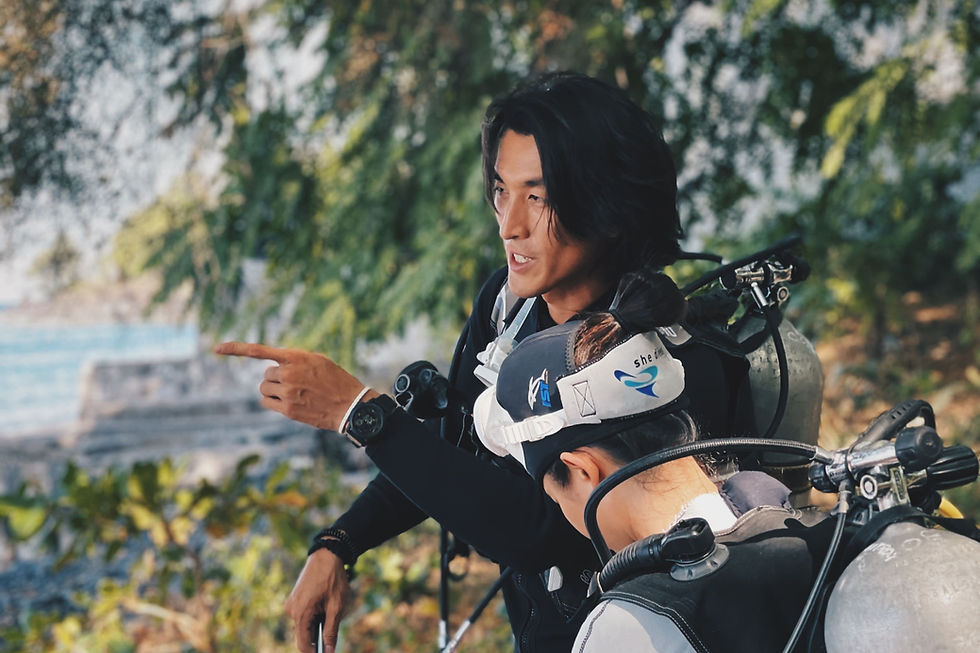
The benefit of learning in a familiar language is not limited to translating dive terminology. Clear understanding of mask clearing, equalisation, neutral buoyancy and emergency procedures directly affects confidence and learning. When enquiring, provide your dates, group size, dive experience and preferred language so that the actual arrangement can be confirmed in writing.
What should a Tulamben diving budget include?
Do not compare only the certification fee or the price of one dive. The useful number is the total cost of a trip that can actually be completed.
Diving or course: Number of dives, theory or eLearning, instructor or guide, certification fee.
Equipment: Whether the BCD, regulator, mask, wetsuit, fins and dive computer are included.
Group setup: Maximum group size, instructor or assistant allocation, and confirmed teaching language.
Stay and meals: Number of nights, room type, breakfast and single supplement.
Transport: Airport or regional transfer, local dive-site transport and night or out-of-area surcharges.
Images: Whether basic action-camera clips are included and whether a professional underwater shoot requires a separate booking.
Schedule buffer: An extra night for the no-fly interval, late arrivals or adjustments for conditions.
A practical decision
Tulamben should not take over your entire Bali itinerary if your priorities are nightlife, shopping and a busy resort atmosphere. It is a strong choice if you want to build confidence as a new diver, explore the Liberty, search for macro life or complete several dives over a few days without long daily transfers.
Before booking, confirm four things first: dates, number of travellers, certification or experience, and the departure flight. Add any requirement for Mandarin instruction, accommodation or professional underwater photography. This gives the dive team enough information to build an itinerary that works in practice, rather than simply sending a price list.

Ask Melibe about dates and trip planning on WhatsApp.


Comments